Five minutes.
Actually caught up.
You scroll for an hour and still feel behind. That's not you, that's the design. Go Brief is the same swipe with a finish line: one daily news brief, written at your level, in a feed you built. Then it ends.
Free. No ads in your feed. No paywall. No spam.
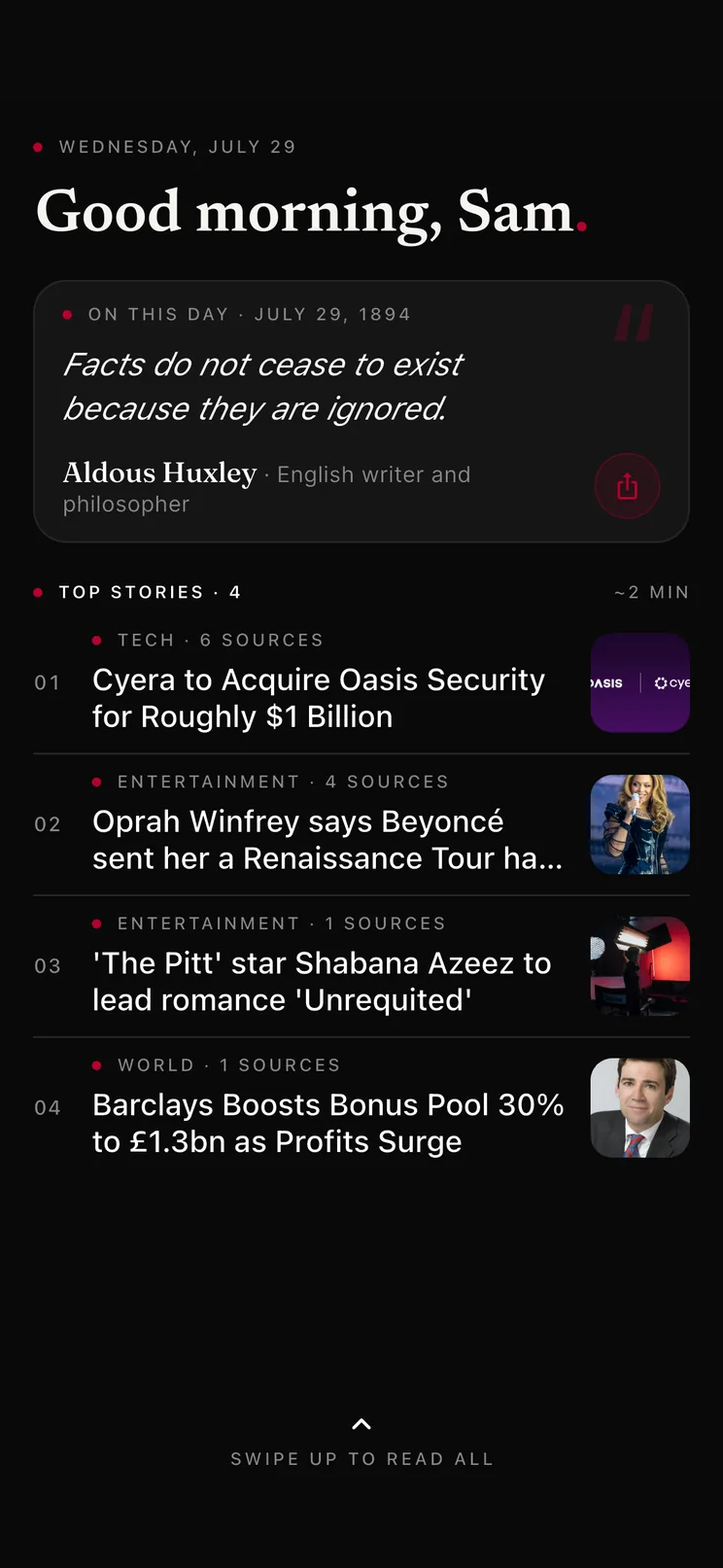
Go Brief at a glance
You’re not the problem. The feed was.
Go Brief is a free news app that gives you one daily news brief you can finish in about five minutes. You pick the categories and their order, you set how deep Tech and Finance are written, and you choose the time it lands.
Every other feed you open was built the other way round. It has no bottom, because a thing with a bottom is a thing you can put down. That isn’t a flaw in you. It’s the product working — here’s what actually helps.
You build it once. It stays built.
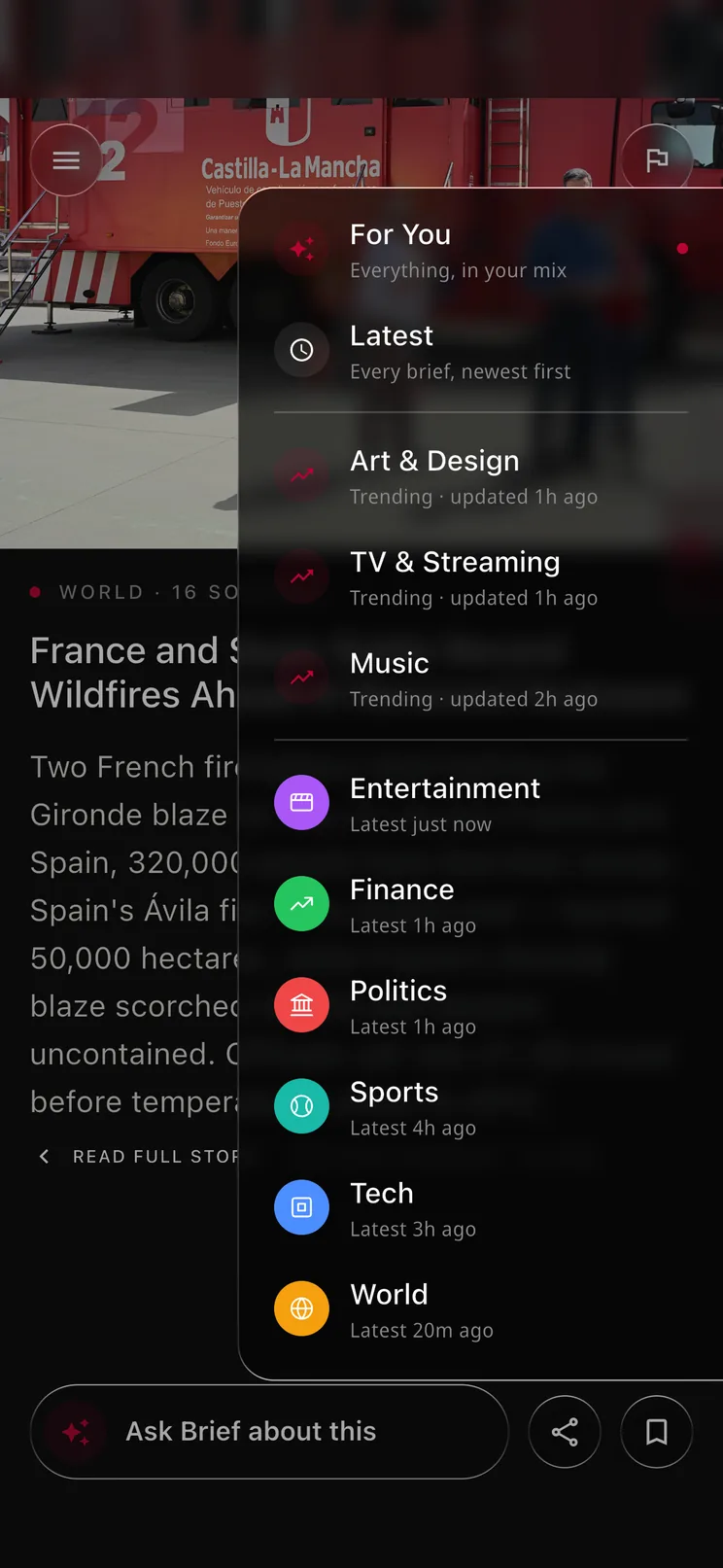
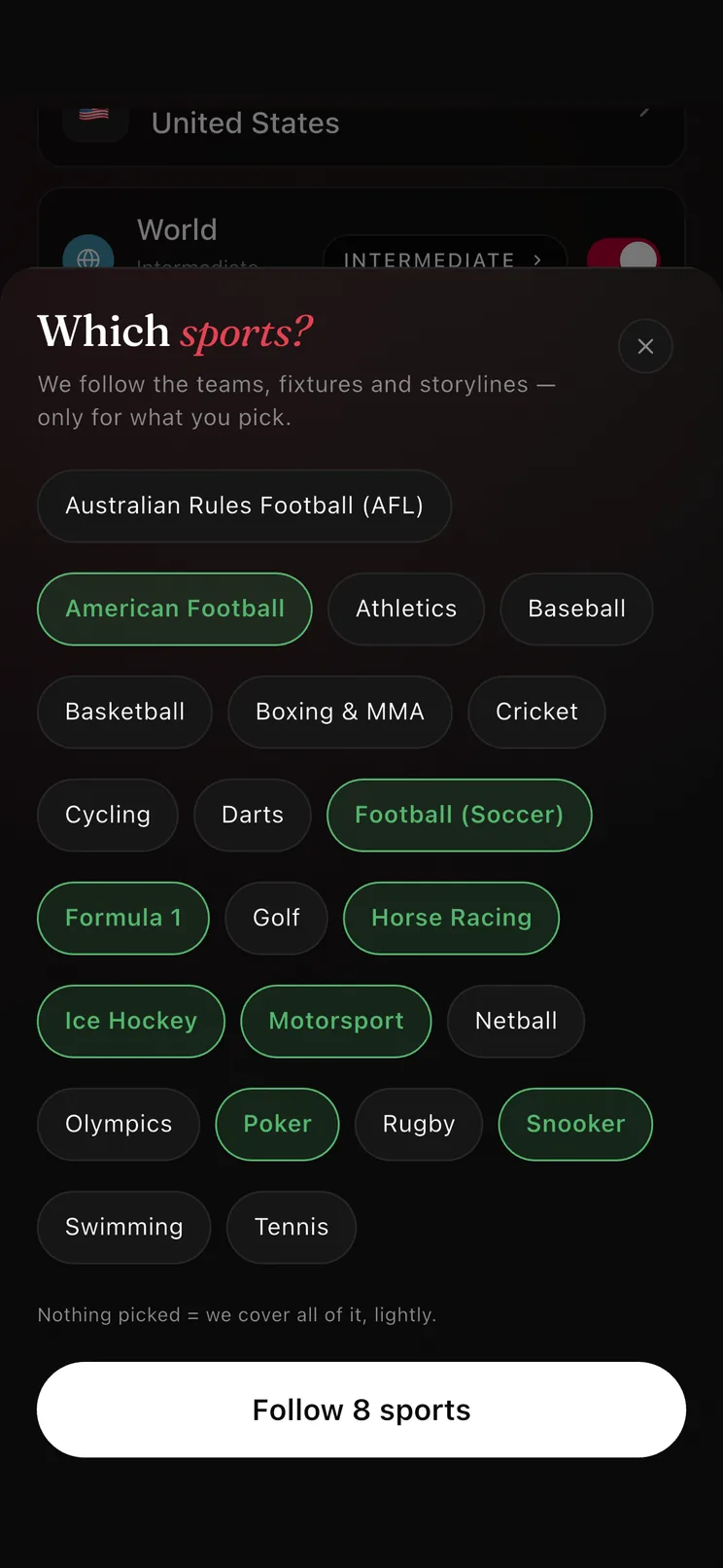
Go Brief builds your feed from six categories you choose — Entertainment, Finance, Politics, Sports, Tech and World — plus the sub-topics underneath them: 22 sports, 12 kinds of entertainment. Your 8 sports, not the other 14. The order you set is the order you get, and your lanes don't get quietly reshuffled overnight because something else got more clicks.
- Six categories, and the sub-topics under every one
- Your order, kept — never re-ranked to keep you scrolling
The feed ends. That’s the point.
Your Daily Brief arrives at a time you pick. Set it for 7am and it's your first coffee; set it for 6pm and it's the day, wrapped. Swipe through bite-size story cards, each one written from real reporting, and when you reach the end your topics are done for the day.
- No infinite scroll waiting underneath
- No “you might also like” to fall into
- No ad between you and the story you opened
Breaking, on your terms
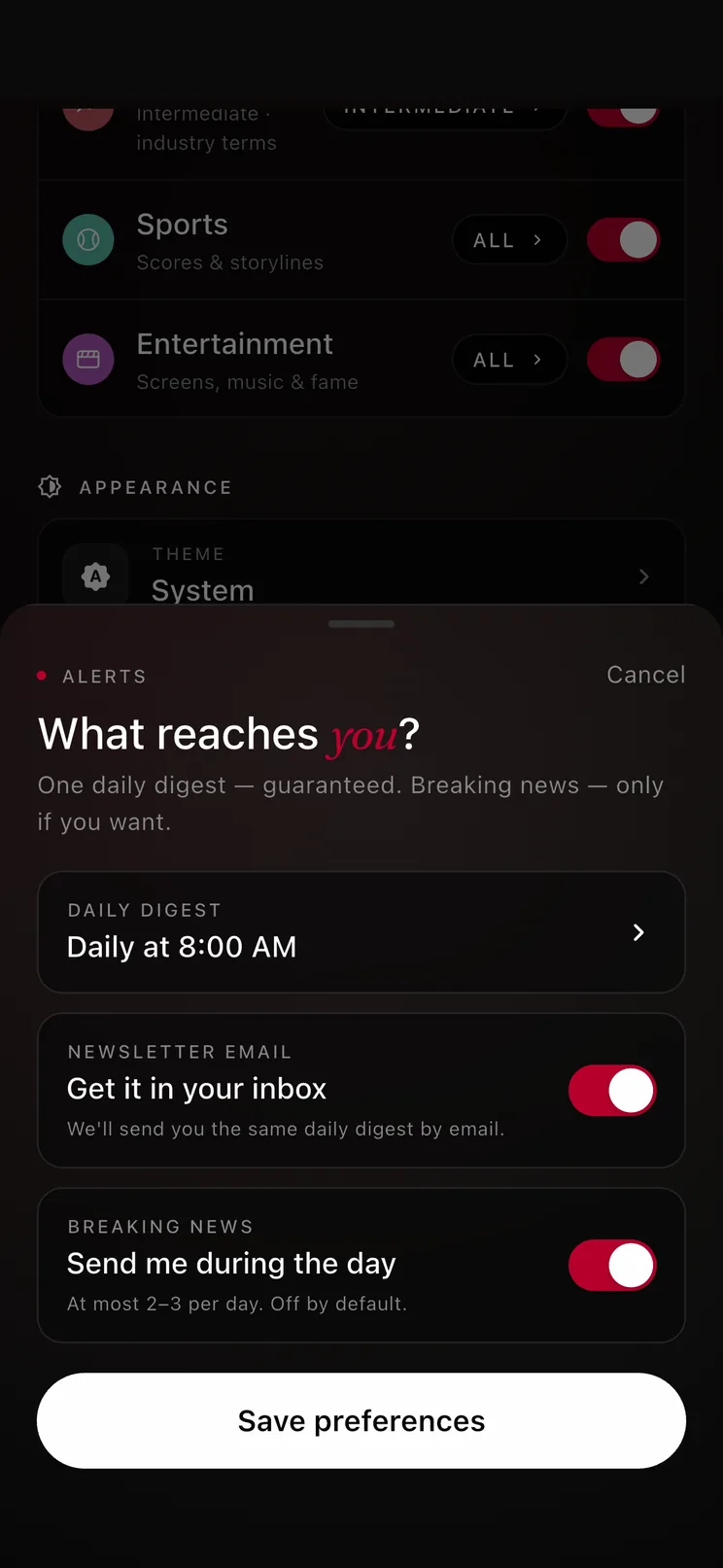
Alerts stay off until you switch them on. Even then it's two or three a day at most, not a stream. Your lock screen stays yours.
Same story. Your level.
Go Brief writes each Tech and Finance story at the level you set for that topic — Beginner, Intermediate or Expert. Tech expert, finance beginner: same person, same app. Nobody should have to pretend they already know what a basis point is.
- A different level for Tech and for Finance
- Set once, applied to every Tech and Finance story
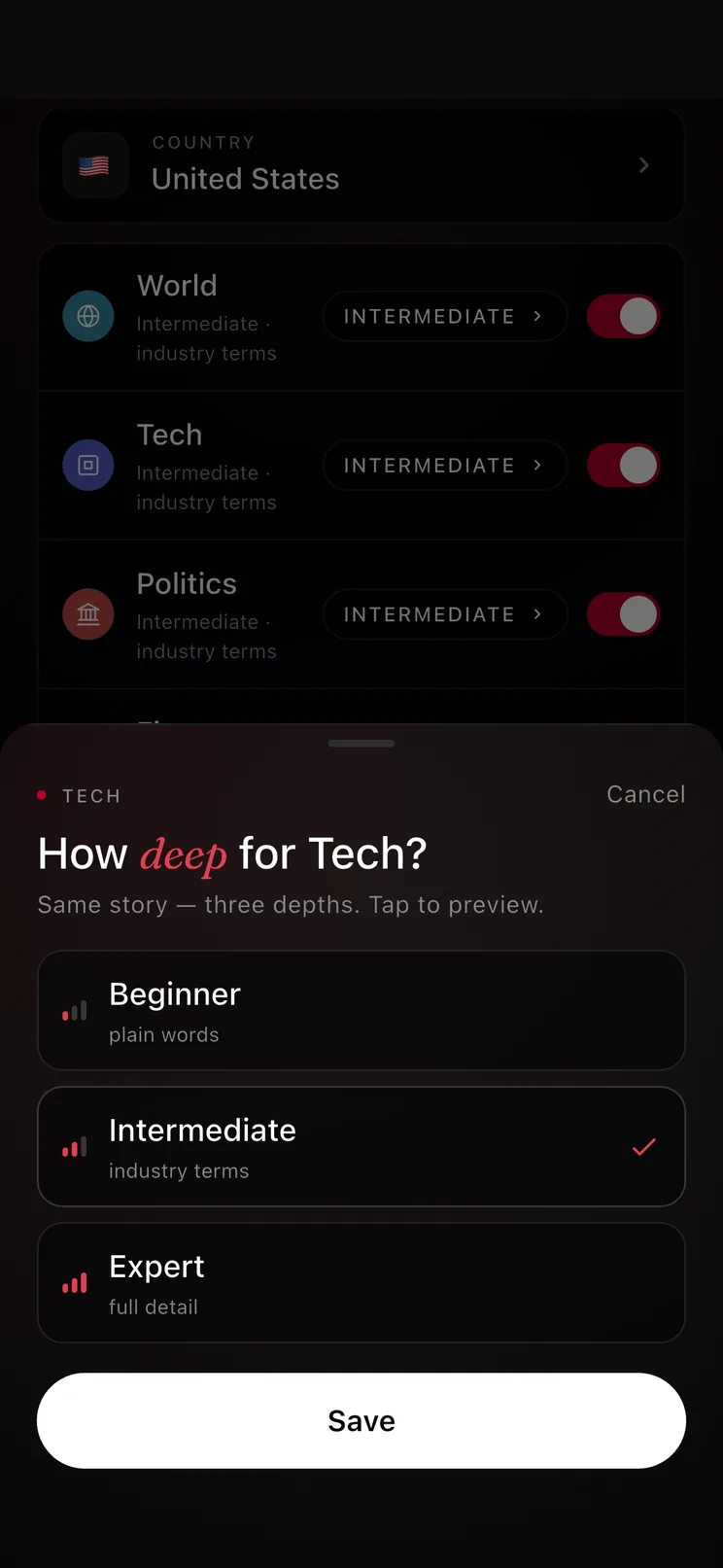
Don’t get a story? Change the depth.
Long-press any Tech or Finance story to shift its depth on the spot — and back — without disturbing the rest of your feed. Same facts, rewritten for you. Try it:
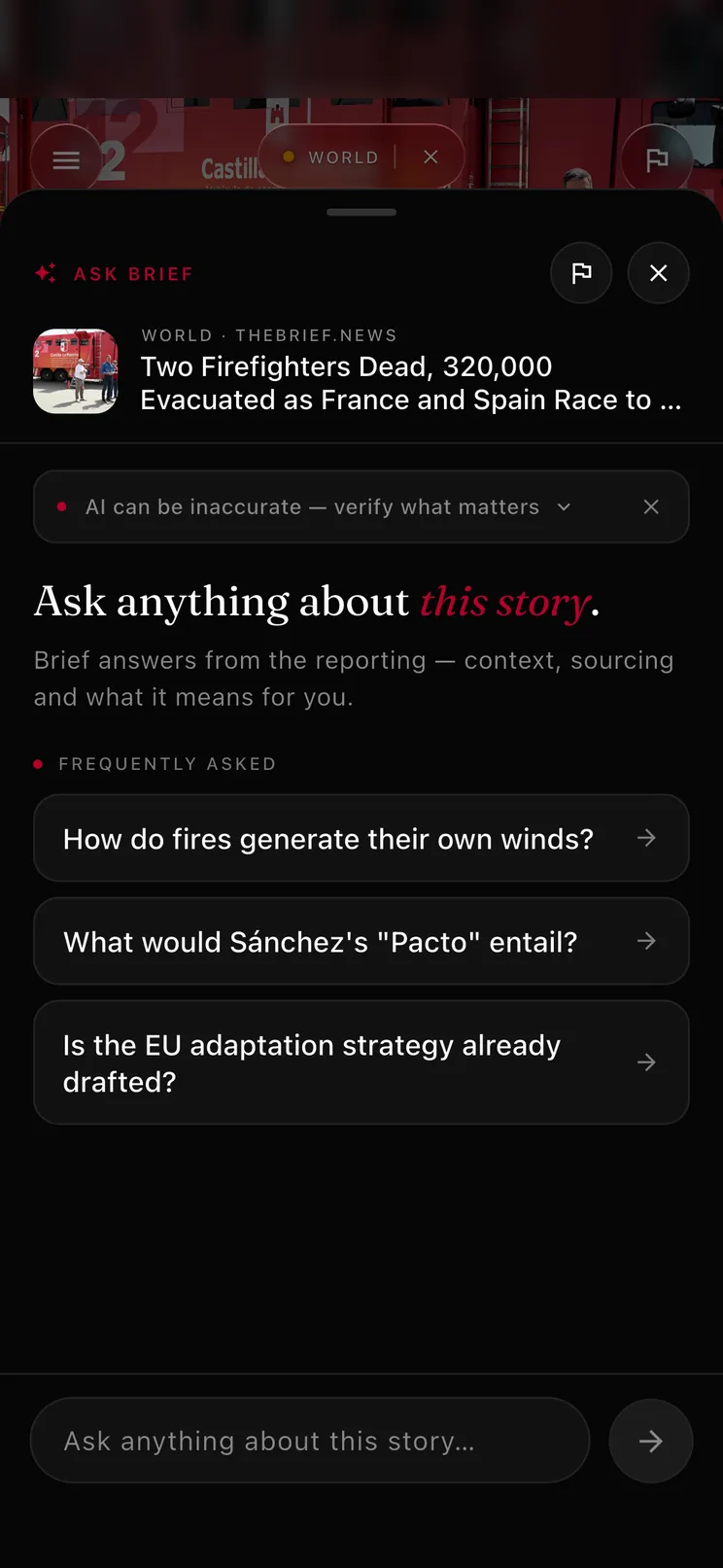
Wait, what? Just ask.
Ask Brief answers questions about any story in Go Brief — who this person is, why this matters, what happened before this — using the reporting the story was written from, not thin air. Ask a follow-up, then another. The brief still ends.
- Answers drawn from the reporting behind the story
- Suggested questions for when you don't know what to ask
Sourced, bylined, and about two minutes.
Every Go Brief story shows how many sources it draws on and who wrote it, so you can see exactly which reporting it came from and go straight to it. No ads in the card, no clickbait headline, no five paragraphs before the news.
- The source count on every card
- A named byline, and the reporting one tap away

Go Brief vs a typical news app.
This isn’t a competitor teardown. It’s the pattern most big news feeds share — and what Go Brief does instead.
| A typical news app | Go Brief | |
|---|---|---|
| The shape of it | No end. The feed refills as fast as you scroll. | Your Daily Brief ends. About five minutes, and you're done for the day. |
| Ads and clickbait | Ads between you and the story; headlines written to be clicked, not read. | No ads in your feed. Every story sourced and bylined, so you can go straight to the reporting. |
| Who picks your topics | Ranked to keep you scrolling; what you asked for gets quietly overridden. | You pick six categories and the sub-topics under them. The order you set is the order you get. |
| Notifications | As many as it takes to get you back. | One brief a day, at a time you pick. Breaking alerts off by default; two or three a day at most when you turn them on. |
| How it's written | One tone, one depth, framing and jargon you didn't choose. | For Tech and Finance, set Your Level per topic — Beginner, Intermediate or Expert — and re-level any story on the spot. |
| What the AI does | Summaries you can't trace, or can't tell are summaries. | Ask Brief answers from the reporting behind the story. You set the level, you ask the questions. |
| Price | Free until the paywall. | Free to read. The whole daily brief, not a teaser. |
“A typical news app” describes the common pattern across large ad-supported news feeds — not any one app. For the named version, read how Go Brief compares with 17 other news apps, weaknesses and all.
What you won’t get.
No ads in your feed. Nothing gets sold to you between stories.
No paywall. Free to read — the whole daily brief, not a teaser.
No clickbait. Every story is sourced and bylined, so you can see exactly which reporting it came from and go straight to it.
No notification spam. One brief a day, and only the alerts you asked for.
Five minutes. Real news, at your level, in a feed you built. Then you close it and get on with your day.
Scroll smarter.
Questions people actually ask.
Is Go Brief free?
Go Brief is free on iOS and Android, and there is no paywall — you get the whole daily brief, not a teaser. There are no ads in your feed either, so nothing gets sold to you between stories. Every story is sourced and bylined, and reading them costs nothing.
Do I need an account?
Yes — a free account. It's what lets your feed, your levels and your delivery time follow you between devices, so you set Go Brief up once rather than on every phone you own. There's no subscription, no card and no paywall behind it; the whole daily brief is free to read.
Does AI write the stories?
Every Go Brief story is written from real reporting, and every one is sourced and bylined so you can see exactly which reporting it came from and go straight to it. What AI does is let Tech and Finance stories be written at your level — Beginner, Intermediate or Expert — and answer your questions in Ask Brief. It works for you, not instead of journalists.
How long does the daily brief take to read?
About five minutes. Your Daily Brief is a set of bite-size story cards you swipe through, and it ends — there is no infinite feed waiting underneath it. Individual stories carry their own read estimate, usually around two minutes, so you know what you're committing to before you open one.
How is Go Brief different from Apple News or Google News?
Apple News and Google News are large feeds built to keep going: they rank stories for you and there is always more. Go Brief is finishable. You pick the categories and their order, your brief arrives once a day at a time you choose, Tech and Finance stories are written at the level you set, and then it ends.
What is Your Level?
Your Level is how Go Brief matches a story to what you already know. For Tech and Finance, set it per topic — Beginner, Intermediate or Expert — so you can be a tech expert and a finance beginner in the same app. You can also re-level any single Tech or Finance story on the spot, plain or deep, without changing the rest of your feed.
Can I turn notifications off?
They start off. Go Brief sends one thing by default: Your Daily Brief, at a time you pick. Breaking alerts are opt-in — they stay off until you switch them on, and even then it's two or three a day at most, not a stream. That is the whole notification story.
What topics does Go Brief cover?
Six categories: Entertainment, Finance, Politics, Sports, Tech and World — plus the sub-topics underneath, including 22 sports and 12 kinds of entertainment. You choose which ones go in Your Feed and what order they arrive in, so you can take your 8 sports and leave the other 14.
Where do the stories come from?
Every Go Brief story is written from real reporting and is sourced and bylined. Each story card shows how many sources it draws on, and you can see exactly which reporting it came from and go straight to it. Go Brief is the layer that makes that reporting quick to read, not a replacement for it.
Is Go Brief biased?
Go Brief gives you what happened, written at the level you set. You choose the topics and the order, so your feed isn't ranked by what will keep you scrolling. Every story is sourced and bylined, which means you can always open the original reporting and judge it for yourself.
What is Ask Brief?
Ask Brief is the question box on every story. Ask who a person is, why something matters, or what happened before this, and the answer comes from the reporting behind the story rather than from thin air. Ask a follow-up, then another — your brief still ends when it ends.
Won't another news app just add to my screen time?
This one is built to end. Your Daily Brief takes about five minutes, and when it's done there is no infinite feed underneath it, no 'you might also like', and nothing pinging you to come back. You read it, you're caught up on your topics for the day, and you close it.
Read one right now.
Every brief in the app is published on the web too. No app, no account — just read one and see whether it’s for you.
- Intermediate
Texas Man Charged With Murder in Shooting Death of Missouri Teen on Interstate
- Intermediate
Celtic come from behind to beat Hibernian 2-1, four points clear at top
- Intermediate
Audi Plans $4bn First US Factory in Macon, Georgia
- Intermediate
Jay-Z closes Jay-Z 30 Tour at SoFi Stadium with Snoop Dogg, Dr. Dre and Too Short
Tech and Finance stories are written at three levels — the badge says which one the link opens.
Browse every brief →Five minutes from now, you’re caught up.
Your topics. Your order. Your level. One brief a day, at a time you pick — and then it ends.
Free to download. No ads in your feed. No paywall. No spam.

Why we built it.
Made for You, or Made to Keep You?
Personalised news promised something made for you. Too often it was built to keep you scrolling. The problem was never personalisation — it was who it served.
The News Isn't Written for You
Every article is written for a reader who doesn't exist — too basic for the expert, too dense for the newcomer. The fix isn't better writing. It's depth you choose.
News Avoidance Is at a Record High. The Reasons Are Specific.
Nearly 40% of people now actively avoid the news. Reuters, Pew, and APA data show why — and the reasons aren't what most editors assume.
Reading Builds Cognitive Reserve. Doom Scrolling Doesn't.
What the research actually says about reading, attention, and the brain — and why the difference between active reading and passive scrolling matters more than total screen time.